
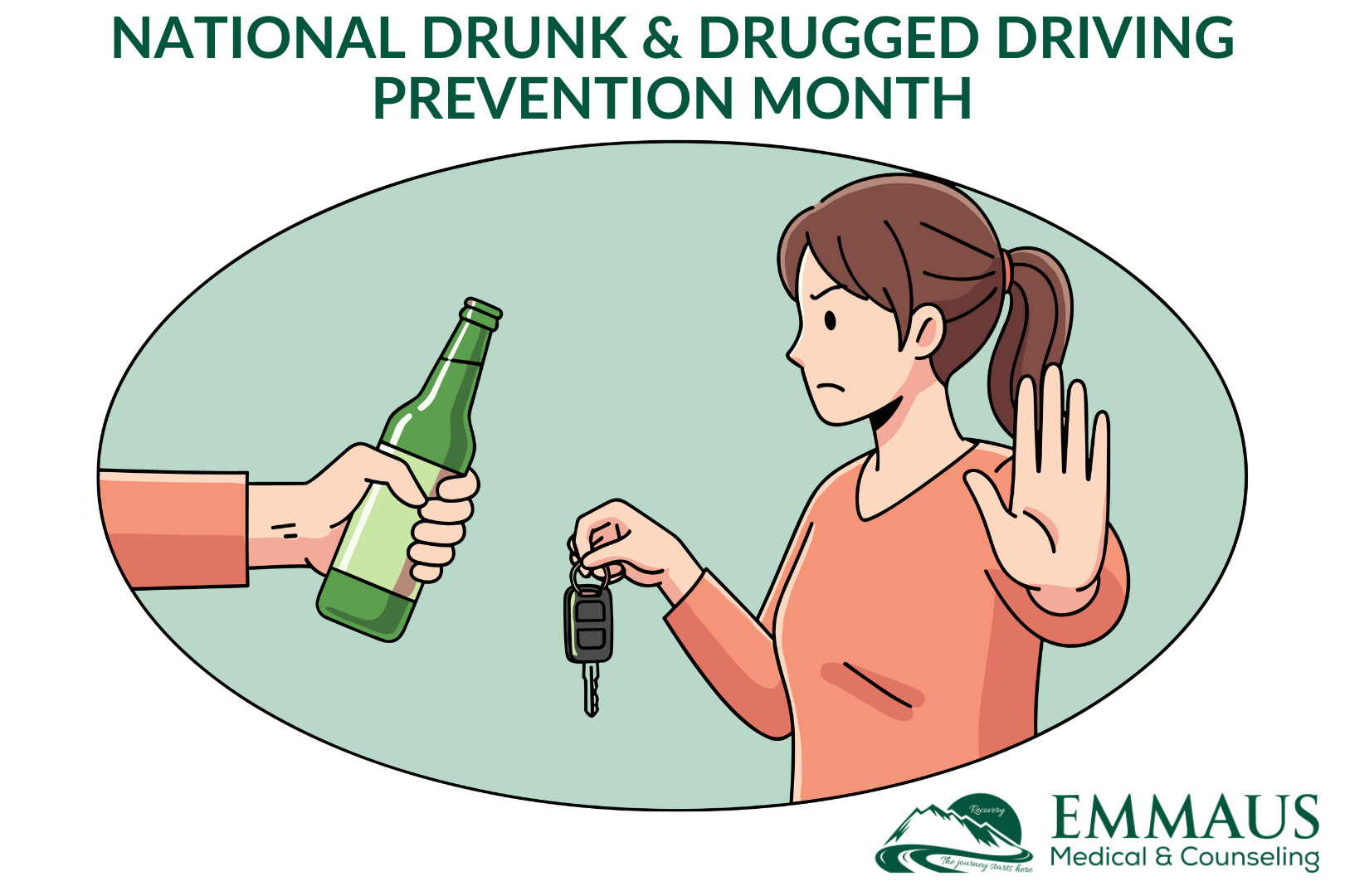
Every December, National Drunk & Drugged Driving Prevention Month serves as a critical reminder of the devastating consequences impaired driving can have on individuals, families, and entire communities. While the holidays are often a time of celebration and connection, they are also a period when alcohol and drug use increases—making prevention, education, and support more important than ever.
At Emmaus Medical & Recovery, we believe that impaired driving is not only a public safety issue, but a health issue—one deeply connected to substance use disorders, mental health, and access to effective treatment. By raising awareness and encouraging recovery, we can save lives both on and off the road.
This article explores the dangers of drunk and drugged driving, the role substance use plays, and how prevention and treatment are essential tools in protecting our communities.
Understanding Impaired Driving
Impaired driving occurs when a person operates a vehicle while alcohol, drugs, or a combination of substances compromises their ability. While drunk driving is widely recognized as dangerous, drugged driving—including the misuse of prescription medications—is an equally serious and growing concern.
Substances that can impair driving include:
- Alcohol
- Illicit drugs
- Prescription pain medications
- Anti-anxiety medications
- Sleep aids
- Cannabis and synthetic substances
- Combined use of alcohol and drugs
Any substance that affects reaction time, coordination, judgment, or alertness can significantly increase the risk of accidents.
The Scope of the Problem
Impaired driving remains one of the leading causes of preventable injury and death in the United States. According to national safety data, thousands of lives are lost each year due to alcohol- or drug-related crashes. These incidents don’t just affect drivers—they impact passengers, pedestrians, cyclists, and families left behind.
What makes impaired driving particularly tragic is that it is entirely preventable. With the right education, support, and access to treatment, many of these accidents could be avoided.
Alcohol and the Brain: Why Drunk Driving Is So Dangerous
Alcohol is a central nervous system depressant, meaning it slows communication between the brain and the body. Even small amounts of alcohol can impair driving abilities.
Effects of alcohol on driving include:
- Slower reaction time
- Reduced coordination
- Impaired judgment
- Blurred vision
- Decreased concentration
- Overconfidence and risk-taking behavior
As blood alcohol concentration (BAC) rises, the risk of a crash increases exponentially. Many people mistakenly believe they are “okay to drive” after just a few drinks, but impairment begins long before someone feels drunk.
Drugged Driving: A Growing Concern
While public awareness around drunk driving has improved, drugged driving often receives less attention—despite being equally dangerous.
Drugged driving can involve:
- Illegal substances
- Misuse of prescription medications
- Using medications without understanding side effects
- Combining drugs with alcohol
Certain medications, even when taken as prescribed, can cause drowsiness, dizziness, delayed reaction time, or confusion. When combined with alcohol or other substances, these effects become even more dangerous.
Drugged driving is particularly concerning because impairment may not always be obvious to the person using the substance, leading to false confidence behind the wheel.
Impaired Driving and Substance Use Disorders
Impaired driving is often a symptom of a larger issue: substance use disorder (SUD). When substance use becomes compulsive or uncontrollable, decision-making is compromised, and risky behaviors—like driving while impaired—become more likely.
Substance use disorders can affect anyone, regardless of age, background, or circumstances. Without treatment, the risks often escalate, putting both the individual and others in danger.
Recognizing impaired driving as a health issue allows us to shift the conversation from punishment alone to prevention, treatment, and recovery.
The Impact on Families and Communities
The consequences of impaired driving extend far beyond the crash itself. Families may face:
- Loss of a loved one
- Life-altering injuries
- Emotional trauma
- Financial strain
- Legal consequences
Communities are also affected through increased healthcare costs, emergency response strain, and long-term social impacts. Prevention and treatment efforts benefit everyone by reducing these far-reaching consequences.
Why the Holidays Increase Risk
The holiday season presents unique challenges:
- Increased social gatherings
- Greater availability of alcohol
- Heightened stress and emotional triggers
- Changes in routine
- Travel and late-night driving
For individuals struggling with substance use or mental health challenges, the holidays can intensify cravings and emotional distress. This makes December a critical time for awareness, prevention, and support.
Prevention Starts With Education
Education is one of the most effective tools in preventing impaired driving. When people understand how substances affect the brain and body—and the real consequences of impaired driving—they are more likely to make safer choices.
Prevention strategies include:
- Planning a sober ride in advance
- Using ride-share services
- Assigning a designated driver
- Avoiding driving after taking medications
- Speaking up when someone should not drive
- Encouraging open conversations about substance use
Education should start early and continue throughout adulthood, reinforcing the message that impaired driving is never worth the risk.
The Role of Treatment in Prevention
One of the most powerful ways to prevent impaired driving is by addressing substance use at its root. Treatment saves lives—not only for those struggling, but for everyone who shares the road.
Effective treatment can help individuals:
- Understand triggers and patterns of use
- Develop healthier coping strategies
- Address underlying mental health concerns
- Rebuild decision-making skills
- Restore relationships and stability
- Reduce risky behaviors, including impaired driving
Recovery is not just about stopping substance use—it’s about building a safer, healthier life.
How Emmaus Medical & Recovery Supports Change
At Emmaus Medical & Recovery, we provide compassionate, evidence-based care for individuals struggling with substance use and co-occurring mental health conditions. Our approach acknowledges that healing is a personal, complex, and achievable process.
By offering comprehensive treatment services, we help individuals regain control, rebuild trust, and make safer choices that protect themselves and others.
Our mission aligns closely with the goals of National Drunk & Drugged Driving Prevention Month: saving lives through awareness, treatment, and hope.
Reducing Stigma Encourages Safer Choices
Stigma remains a significant barrier to prevention and treatment. When people feel ashamed or judged, they are less likely to seek help—and more likely to hide risky behaviors.
By treating substance use disorders as health conditions rather than moral failures, we:
- Encourage early intervention
- Reduce fear around asking for help
- Promote accountability without shame
- Support long-term recovery
Reducing stigma is essential to preventing impaired driving and fostering safer communities.
What You Can Do This Month
National Drunk & Drugged Driving Prevention Month is a call to action. Everyone has a role to play.
You can:
- Commit to sober driving
- Check medication warnings before driving
- Talk openly with loved ones about substance use
- Support someone seeking treatment
- Share educational resources
- Advocate for prevention in your community
Small choices, made consistently, can save lives.
Recovery Is Prevention
Recovery doesn’t just change individual lives—it prevents future harm. When people receive the support they need, they are better equipped to make safe decisions, manage stress, and contribute positively to their families and communities.
Choosing recovery is choosing:
- Responsibility
- Healing
- Accountability
- Safety
- Hope
At Emmaus, we believe recovery is one of the strongest forms of prevention.
Moving Forward Together
National Drunk & Drugged Driving Prevention Month reminds us that impaired driving is not inevitable—it is preventable. Through education, compassion, and access to treatment, we can reduce harm and protect lives.
If you or someone you love is struggling with substance use, know that help is available. Seeking support is not a sign of weakness—it’s a step toward safety, healing, and lasting change.
At Emmaus Medical & Recovery, we are committed to walking alongside individuals and families on the path to recovery—because safer roads begin with healthier lives.