
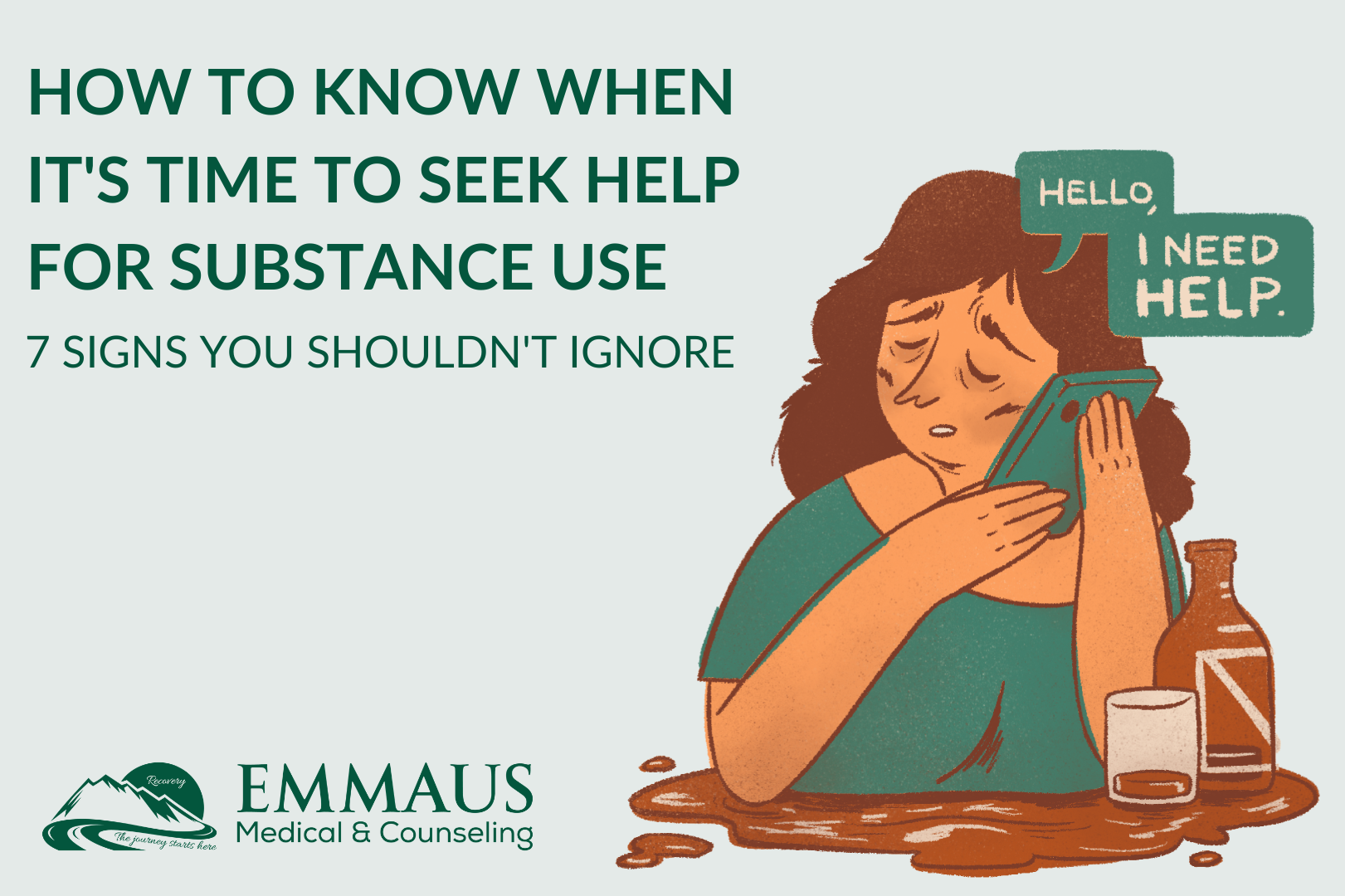
Deciding whether your relationship with alcohol or drugs has crossed the line from “recreational” or “under control” into something more serious is rarely simple. Substance use disorders rarely happen overnight. Instead, they often creep in quietly, masking themselves as a bad habit, a way to blow off steam, or a coping mechanism for a stressful season of life.
Because addiction alters the brain’s reward system and rational thinking, it is remarkably easy to rationalize or minimize the warning signs. You might tell yourself, “I still go to work every day,” or “At least I only drink at night.”
Recognizing that you—or someone you love—might need professional support is an act of profound courage, not weakness. To help bring clarity to a confusing situation, here are 7 signs that indicate it’s time to stop second-guessing and reach out for professional help.
1. You’ve Tried to Cut Back or Stop, But Can’t Stay Stopped
One of the clearest indicators of a developing substance use disorder is the loss of control. Have you promised yourself that you’d only have two drinks, only use on weekends, or quit altogether on Monday—only to find yourself using again despite your best intentions? When willpower alone isn’t enough to keep commitments to yourself, it’s not a failure of character; it’s a sign that the cycle requires professional tools and medical insight to break.
2. Substance Use is Impacting Your Work, School, or Responsibilities
Has your performance at work or school begun to slip? Maybe you are missing deadlines, calling in sick more frequently, arriving late, or finding it difficult to concentrate. When substance use begins to interfere with your core daily obligations and threatens your financial stability or career, it has moved past a personal habit and is actively eroding your livelihood.
3. Relationships Are Straining or Breaking
Substance use rarely affects just one person. If friends, partners, or family members have expressed concern, anger, or sadness about your drinking or drug use, pay attention. Are you starting to withdraw from loved ones, avoiding gatherings where substances won’t be present, or becoming defensive, irritable, or secretive when questioned? Hiding your usage or isolating yourself from those who care about you is a classic red flag.
4. You Experience Physical Tolerance or Withdrawal Symptoms
Over time, the body adapts to regular substance use, requiring larger amounts to achieve the same effect (tolerance). More alarmingly, if you experience uncomfortable or painful physical and psychological symptoms when you try to stop—such as shaking, sweating, nausea, intense anxiety, insomnia, or overwhelming cravings—your body has developed a physical dependence. Trying to push through severe withdrawal on your own can be difficult and, in some cases, medically risky.
5. Continuing Despite Clear Negative Consequences
If you’ve experienced severe fallout—such as a health scare, legal trouble (like a DUI), financial distress, or a major argument—and you still find yourself reaching for the substance anyway, the behavior has taken the driver’s seat. When the compulsion to use overrides your desire to protect your health, safety, and future, professional treatment is essential to regain control.
6. Using to Cope with Stress, Trauma, or Mental Health
Many individuals struggling with substance use are quietly fighting an internal battle with anxiety, depression, unprocessed trauma, or chronic stress. Using alcohol or drugs to “self-medicate” or numb emotional pain might offer temporary relief, but it ultimately worsens mental health over time. True healing requires addressing the emotional “why” beneath the addiction, rather than just managing the symptoms.
7. Constantly Thinking About or Planning Your Next Use
Does substance use take up a major portion of your mental real estate? If you find yourself constantly planning when you can use next, worrying about whether you have enough supply, or organizing your social life entirely around where substances will be available, the addiction is dictating your priorities and robbing you of your presence in daily life.
You Don’t Have to Do This Alone
If you recognize yourself or a loved one in these signs, please know this: you do not have to hit rock bottom to ask for help.
Recovery is possible, and taking the first step doesn’t have to feel overwhelming. At Emmaus Medical & Recovery, we believe in meeting people right where they are with compassionate, non-judgmental outpatient care. Whether you are exploring Medication-Assisted Treatment (MAT), looking for individual counseling, or trying to figure out how to help a family member, our team is here to walk with you every step of the way.
We offer same-day appointments, flexible telehealth options across Tennessee and Virginia, and care that respects your life, your family, and your schedule.
Take a deep breath. Real help is available.
- Call us today at 423-202-3008 or reach out to us online to start your confidential conversation.